
Trade Show Backdrops: Types, Sizes, and How to Choose the Right One
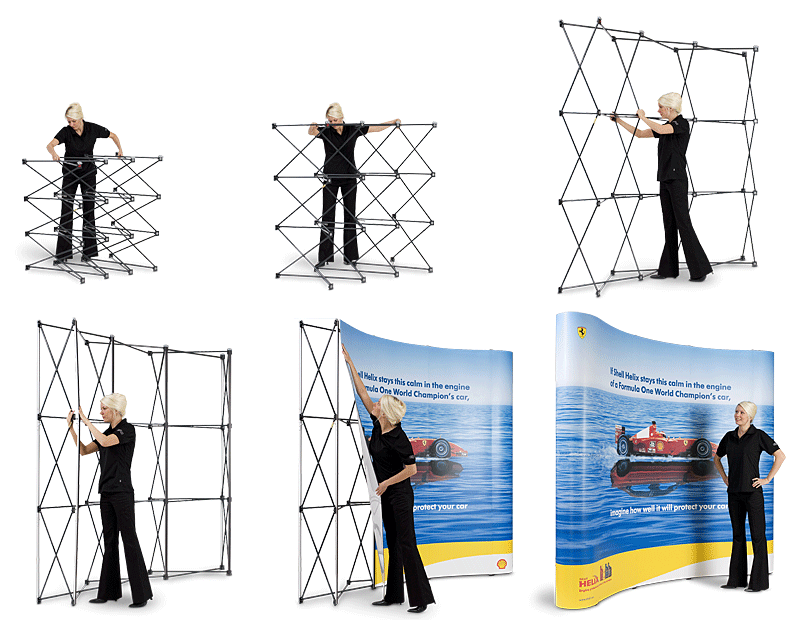 Pop-Up Backdrops |

Zip-Up / Tube Fabric |

Hybrid / SEG Fabric |

Modular Panel Booths |

Backlit Backdrops |
|

Booth-in-a-Bag Style |

Hybrid Tension Displays |

Trade show backdrops are the large branded display that covers the rear wall of a booth, usually the biggest surface aisle traffic sees in the first two seconds. Options range from portable pop-up fabric walls to full backlit tension fabric systems. This guide covers backdrop types, sizes by booth footprint, materials, step-and-repeat vs full brand mural, cost ranges, design tips, and a buyer checklist.
Shop hardware on the category page: exhibit backdrops & trade show backdrop displays. Use this page to plan type, size, and budget before you order.
What Is a Trade Show Backdrop?


A trade show backdrop is a large branded display on the rear wall of a booth. It carries logo, value proposition, and imagery in one view. “Backdrop,” “backwall,” and “back wall display” mean the same hardware role. Step and repeat is a graphic pattern on a backdrop, not a separate hardware family.
Prices run from simple banner walls under about $500 to full backlit tension systems well over $5,000. The right pick depends on booth size, show frequency, and whether portability or stop-power matters more.
Types of Trade Show Backdrops


1. Pop-Up Displays
Accordion-style aluminum frames expand and lock open. Fabric graphics attach with Velcro, silicone edge beading, or magnets. Sizes commonly 3 ft, 5 ft, 8 ft, and 10 ft, flat or curved; units can link. Setup is often 10-20 minutes with no tools. Many models offer backlighting. Typical range: about $600–$3,500 depending on size and lights.
Best for: Fast setup, large branded surface, proven portable programs. See pop-up booths.
2. Tension Fabric (Tube Frame / Pillowcase)
Aluminum tube sections slip together; a pillowcase fabric slides over and zips tight for a seamless face. Looks clean and modern with dye-sublimation print. Widths often 3-20 ft, flat or curved, plus shapes (arches, towers). Setup often 10-15 minutes. Typical range: about $700–$4,000.
Best for: Polished look without a full custom build. See tube frame tension fabric displays.
3. SEG (Silicone Edge Graphics) Frames
Extruded frames with a channel; silicone bead on the fabric snaps in for a drum-tight, near-frameless face. Graphics swap by popping the bead. Setup often 20-30 minutes. Pricing often about $900–$6,000+ with backlight options.
Best for: Frequent exhibitors who want maximum graphic quality and easy reprint cycles. Embrace-style push-fit kits are a common portable SEG path.
4. Backlit Backdrop Displays
Any of the frame types above with LEDs behind translucent fabric. Highest stop-power in bright halls. 10 ft wide is common. Setup with lights often 30-45 minutes. Ranges often about $1,800–$12,000+.


Browse backlit trade show displays and backlit kits.
5. Rigid Frame / Hybrid Displays
Extruded aluminum, toolless assembly, graphics via Velcro, clips, or SEG. More modular than a single pop-up: reconfigure 10×10 vs 10×20 without a full rebuild. Typical range: about $1,200–$8,000. Sacagawea- and Magellan-style hybrids mix tension walls with counters and accents.
6. Truss Systems
Steel or aluminum truss for structure, monitors, shelves, and island presence. Best for 20×20 and larger. Budgets often $3,000–$20,000+.
7. Banner Stand Wall
Multiple retractable stands side by side (some magnetically linked) form a budget backwall. Hardware doubles for lobbies and road shows. About $300–$1,500 for a full wall set. Pair with best retractable banner stands.
8. Pipe and Drape Fabric Banner
Printed fabric clips or Velcro to show-supplied pipe and drape. Lowest hardware load. About $150–$600. Good for first shows or supplemental graphics.
Backdrop Type Comparison
| Type | Setup | Look | Best booth | Relative cost |
|---|---|---|---|---|
| Pop-up fabric | Minutes | Seamless mural | 10×10 portable | $$ |
| Tube / pillowcase | Minutes | Soft tension face | 10×10-20×20 | $$–$$$ |
| SEG push-fit | Moderate | Drum-tight frame | Premium inline | $$$ |
| Backlit / lightbox | Moderate | High glow | Dim or crowded halls | $$$–$$$$ |
| Hybrid / modular | Moderate | Structured wall + accents | Multi-size programs | $$$–$$$$ |
| Banner stand wall | Fast | Linked vertical panels | Budget / multi-use | $–$$ |
| Step-and-repeat graphic | Fast–moderate | Logo grid / photo wall | Media, sponsorships | $$–$$$ |
How to Choose the Right Backdrop Size

| Booth type | Back wall | Recommended backdrop |
|---|---|---|
| 10×10 inline | 10 ft | 8 ft or 10 ft wide |
| 10×20 inline | 20 ft (two sections) | Two 10 ft units or one 20 ft |
| 20×20 island | Variable | 10-20 ft per open face |
| Tabletop | 4-6 ft | 3 ft or 5 ft tabletop backdrop |
Most 10×10 programs use a 10 ft × ~8 ft backwall that fills the rear line under common height caps. An 8 ft × 8 ft unit leaves side room for shelves or monitors. Confirm the show’s inline height limit (often 8 ft) before ordering taller hardware.
Best Materials for Trade Show Backdrops
Dye-sublimation polyester fabric
Industry standard for modern walls. Ink goes into the fiber: saturated color, less cracking/peeling, wrinkle-resistant, often machine-washable, light (a 10 ft face can weigh only a few pounds). Best default for almost every traveling backdrop.
Vinyl / printed laminate
Heavier and less crease-forgiving. Still useful for fixed installs, some outdoor use, or older rigid/pop-up graphic carriers. Prefer fabric for frequent ship-and-setup cycles.
More on print and specs: trade show graphics.
Backdrop vs. Step and Repeat
- Backdrop = the hardware system (pop-up, tube, SEG, banner wall, etc.).
- Step and repeat = a repeating logo grid printed on that hardware.
Press walls and sponsor photo backdrops lean on step-and-repeat so logos appear in every crop. Most sales booths perform better with a single brand-forward mural (hero product, offer, or tagline) than a logo wallpaper.
How Much Does a Trade Show Backdrop Cost?
| Backdrop type | Approx. hardware + graphic |
|---|---|
| Banner stand wall (3 stands) | $300 – $900 |
| Pipe and drape fabric banner | $150 – $600 |
| Pop-up 8 ft, no lights | $600 – $1,500 |
| Pop-up 10 ft, backlit | $1,800 – $3,500 |
| Tension fabric tube frame 10 ft | $700 – $2,500 |
| SEG frame 10 ft | $900 – $4,000 |
| Backlit SEG 10 ft | $2,500 – $8,000 |
| Large truss | $3,000 – $20,000+ |
Ranges are approximate and vary by configuration and graphics. Replacement fabric graphics often run about 20-40% of the original package, which favors fabric systems when messaging changes often. Broader display planning: how to choose the right trade show display.

How to Design an Effective Backdrop
- One clear message. Name, logo, or primary offer legible from about 20 ft. Skip dense body copy on the wall.
- High contrast. Hall light is flat; bold color and type cut through better than subtle palettes.
- Logo in the upper third. Stays visible when people stand at the table.
- Leave the bottom clear. The lowest 18-24 inches often hide behind counters and cases.
- Print-ready files. Fabric graphics commonly need about 100-150 DPI at final size. Use the free graphics resolution checker before you submit.
Backdrop Checklist for Exhibitors
- Back wall width (10 ft, 20 ft, other)
- Inline height limit (often 8 ft)
- Power if ordering backlit
- Shows per year (buy vs rent; warranty and fabric swaps)
- Setup crew (solo 10-minute kits vs two-person frames)
- Graphic files at correct DPI and size
- Lead time (about 2 weeks production; longer for first custom builds)
Full pre-show list: trade show exhibit checklist. Layout help: how to set up a 10×10 trade show booth. Lighting the wall: trade show booth lighting.
Frequently Asked Questions
What size backdrop do I need for a 10×10 booth?
Most 10×10 inline booths use an 8 ft or 10 ft wide backwall about 7.5-8 ft tall, within show height rules. Confirm the exhibitor manual before ordering.
What is the difference between a backdrop and a banner stand?
A backdrop is a wide backwall system meant to fill most of the rear line. A banner stand is a single vertical panel, usually 24-36 inches wide. Several stands can form a budget wall; one stand alone is not a full 10 ft backdrop.
Can I reuse a backdrop at multiple shows?
Yes. Quality aluminum frames and dye-sub fabric are built for repeated pack-out. Order new fabric when branding changes; keep the same hardware.
Is a backlit backdrop worth the extra cost?
In crowded or dim halls, glow often pays for itself in stop-power. You need booth power (or a plan for it) and a bit more setup time. For quiet tabletop-only events, a strong non-lit fabric wall is usually enough.
How long does setup take?
Many pop-ups and tube frames: about 10-20 minutes. SEG and backlit kits: often 20-45 minutes. Practice once in the warehouse before show week.
Where to Get a Custom Trade Show Backdrop
American Image Displays supplies pop-ups, Waveline-style tube frames, SEG and hybrid systems, backlit walls, modular panels, and banner-wall options. Browse trade show backdrop displays or call (800) 676-3976 with booth size, height limit, and show count for a match.
