
Ultimate Guide to Gamification for Trade Shows
Gamification at trade shows turns passive attendees into active participants by adding game-like elements to booths. This strategy increases engagement, boosts foot traffic, and improves lead generation. Research shows gamified booths see 40% more visitors, 73% higher attendee engagement, and 30% better brand recall. Popular methods include interactive leaderboards, digital scavenger hunts, AR/VR experiences, and trivia games. The key is aligning games with booth design, audience preferences, and business goals to create memorable interactions.
Key Takeaways:
- Why Gamification Works: People enjoy playing, competing, and winning, which keeps them engaged longer.
- Trends & Tools: AR/VR, digital spin-to-win wheels, and live polling are popular options.
- Results: Gamified booths generate 40% more leads and increase dwell time by 40%.
- How to Succeed: Choose games that fit your booth size, audience, and goals. Use tools like modular displays, interactive kiosks, and data capture integrations.
- Measure Success: Track participation, lead conversions, and ROI. Adjust based on feedback for future events.
Gamification isn’t just fun; it’s a proven way to make your booth stand out while achieving measurable results.
How to use Gamification in your exhibition booth? 2023 – Webinar
Gamification Tools and Methods
With the right gamification tools, you can turn your booth from a standard setup into a crowd-pulling attraction. Whether you’re working with a modest budget or have room to go big, there are plenty of proven options to create a buzz and deliver results.
Digital Gamification Tools
Digital tools bring flexibility and creativity to your booth, offering memorable experiences while helping you collect valuable attendee data.
- Digital Spin-to-Win Wheels: These touchscreens instantly randomize prizes and offer multiple reward tiers, encouraging visitors to share their contact details for a chance to win.
- AR Scavenger Hunts: Augmented reality can transform your booth into an interactive playground. For example, Nissan invited attendees to find virtual objects throughout their display space, making the experience both fun and engaging.
- Interactive Photo Booths: With AR elements, these booths let attendees interact with virtual props and animations, creating shareable content. Smile on Click‘s AR Magic photo booths, for instance, deliver immersive experiences that often go viral on social media.
- VR Experiences: Virtual reality offers a deeper level of interaction, particularly useful for companies with complex products or services. These demonstrations leave a lasting impression, keeping your brand top of mind long after the event ends.
- Digital Trivia Games: Combine education with entertainment. For example, Trade Show Labs created "Are You Smarter Than an AI Bot?" – a trivia game where attendees compete against AI, adding a fun challenge to the booth experience.
- Event App Integration: Apps can keep attendees engaged before, during, and after the event. GO WEST used EventMobi‘s features to run pre-event challenges, ensuring active participation throughout the event.
Digital tools are great, but sometimes a hands-on approach works better, especially in less tech-heavy setups.
Physical Game Options
Physical games offer a tactile, interactive experience that appeals to attendees who enjoy hands-on activities.
- Plinko Boards: These are crowd-pleasers, especially when prizes are clearly displayed and tied to your brand.
- Interactive Trivia Contests: Using physical buzzers or answer cards, these contests encourage group participation and work well during scheduled presentations or product demos.
- Raffles and Prize Drawings: Simple but effective, hourly raffles encourage attendees to return to your booth, giving you more chances to connect.
- Skill-Based Challenges: Tailor these to your industry for added relevance. A construction company might host a mini building challenge, while a tech company could offer a coding puzzle.
- Modular Game Stations: These stations can adapt to your booth’s activity level, offering solo challenges during quiet times and group competitions when the crowd picks up.
How Gamification Motivates Attendees
Understanding what drives participation can help you fine-tune your gamification strategy.
- Competition: Real-time leaderboards showcasing top performers inspire visitors to challenge themselves and come back for another try.
- Achievement and Recognition: Badges, certificates, or public shoutouts tap into the human desire for accomplishment, creating positive associations with your brand.
- Social Connection: Games that encourage interaction can foster connections. For example, TD Bank used EventMobi’s networking game during their Diversity & Inclusion Event, sparking interest in the app’s features.
- Reward Systems: Offering prizes that align with your audience’s interests provides instant gratification and reinforces positive behavior.
- Curiosity and Discovery: Adding elements of surprise keeps attendees engaged. The Canadian Meeting + Events Expo used a "play to win" approach to encourage interaction between attendees and exhibitors, making the experience more dynamic and memorable.
The best gamification strategies combine competition, achievement, social connection, and rewards to appeal to a variety of personalities. It’s worth noting that 89% of people say they’re more likely to engage with an app if it includes gamified elements. The same principle applies to your booth – create an environment where attendees naturally want to linger, explore, and engage with your team.
Selecting the Right Gamification Approach
When designing a gamification strategy for your trade show booth, it’s crucial to consider factors like booth size, audience preferences, and your event goals. These elements will help you craft an engaging experience that fits your space and resonates with visitors.
Evaluating Your Booth and Audience
Your booth’s size and layout set the stage for what’s possible. For smaller booths (e.g., 10×10 ft.), activities like digital spin-to-win wheels or trivia games work well. They’re compact yet engaging, drawing attention without overcrowding your space.
In contrast, larger booths allow for more ambitious setups, such as multiple game stations, virtual reality (VR) experiences, or physical challenges. Open layouts with clear pathways are ideal for guiding visitors through interactive elements like touchscreens or demo areas. This ensures smooth traffic flow and maximizes engagement.
Audience demographics also play a big role in determining which games will hit the mark. Research indicates that 81% of trade show attendees find competitive activities helpful for understanding new products, while interactive content generates 52.6% more engagement than static displays. For tech-savvy crowds, high-tech options like VR might be a hit, whereas classic games may appeal more to traditional industries or older audiences. The key is understanding what excites your audience – whether it’s fast-paced action or thought-provoking challenges.
Setting Clear Event Goals
Once you’ve assessed your space and audience, it’s time to define your event objectives. Your gamification strategy should directly support these goals, whether it’s lead generation, brand education, or encouraging networking. For example, gamified events have been shown to increase attendee interactions by 37% and boost booth dwell time by 42%.
If lead generation is your focus, choose games that naturally capture contact information. Digital spin-to-win wheels, app-based challenges, or contest entries can help you collect valuable data. Set specific targets, like the number of leads captured or email sign-ups, to measure success.
For brand education, consider games that reinforce your key messages, such as product trivia or interactive demos. Networking-focused activities, like team-based challenges, encourage deeper conversations and connections with your staff. Aligning gamified elements with specific actions – like app downloads, survey completions, or follow-up meetings – ensures participation translates into meaningful results.
Gamification Decision Checklist
Here’s a handy checklist to guide your decisions and keep your gamification efforts aligned with your trade show goals:
Space and Layout:
- Measure your booth dimensions and account for product displays.
- Identify high-traffic areas for placing interactive elements.
- Avoid activities that could create bottlenecks or safety issues.
- Ensure enough staff is available during peak times.
Audience Considerations:
- Research attendee demographics and professional backgrounds.
- Gauge your audience’s comfort level with technology.
- Match game complexity to the typical time visitors spend at booths.
- Choose rewards that resonate with your audience’s interests.
Goal Alignment:
- Define 2-3 clear, measurable objectives for your gamification strategy.
- Opt for games that naturally support data collection if lead generation is a priority.
- Ensure activities complement your core messaging rather than overshadow it.
- Plan how game participation can lead to meaningful business conversations.
Resources and Logistics:
- Budget for setup and operational costs.
- Allocate time for staff training and event-day management.
- Prepare for technical support needs and have backup plans for low participation or tech issues.
Measuring Success:
- Use data from previous events without gamification as a baseline.
- Set realistic participation goals based on expected booth traffic.
- Define what counts as a qualified lead or meaningful engagement.
- Plan post-event follow-ups to maximize the value of collected data.
Lastly, make sure your booth design reflects your goals, brand identity, and audience preferences. Regularly refine your strategy based on feedback and performance metrics.
The best gamification strategies blend elements like competition, achievement, social interaction, and rewards. Focus on creating experiences that feel natural to your brand while delivering measurable results for your event objectives.
sbb-itb-d6c8c47
Combining Gamification with Booth Design
Creating a gamified trade show experience that truly stands out requires more than just adding games – it’s about blending those interactive elements into your booth’s overall design. When gamification is seamlessly integrated, it can increase booth traffic by as much as 50%. Below, we’ll explore how to bring together interactive technology and booth design to create an engaging visitor experience.
Integrating Games into Booth Layout
Your booth layout is the backbone of a successful gamified experience. It should strategically guide visitors through the space, with interactive elements placed at key touchpoints like entry areas and transition zones. Consider practical details, such as mounting heights for touchscreens, safety clearances for games, and ensuring smooth traffic flow with clear pathways and prominent signage to prevent congestion.
Interactive booths often keep visitors engaged for up to 40% longer than non-gamified setups. To make the most of this extended dwell time, games should not only entertain but also align with your brand message and naturally lead into product demonstrations or discussions.
Using Technology and Display Equipment
While the layout sets the stage, technology brings the interaction to life. Digital displays, kiosks, and multimedia systems can transform a static booth into a dynamic hub of activity.
- Digital display stands: These are perfect for showcasing interactive games, real-time leaderboards, or social media feeds featuring participants’ achievements. For example, trivia games or virtual scratch-offs work well on large screens, creating a visually engaging experience.
- Interactive LED displays: These displays add a wow factor that naturally draws attention. A standout example is Bluewater’s interactive LED basketball court for AT&T during the Final Four Fan Fest in June 2025, which turned an ordinary booth into a memorable attraction. Such setups encourage social sharing, extending your brand’s visibility far beyond the event.
- Modular display systems: These allow flexibility to adapt your booth to different games or audience preferences. Modular components can be adjusted during the event, making it easy to respond to real-time feedback.
- VR and AR technology: Virtual and augmented reality tools are excellent for immersive demonstrations. Whether it’s letting visitors virtually operate machinery or overlaying digital interfaces on physical products, these technologies make complex offerings more accessible and engaging.
- Data capture integration: Interactive kiosks equipped with charging ports can keep attendees engaged while collecting valuable contact information. Social media integration further amplifies your brand’s reach by encouraging attendees to share their experiences.
To ensure success, choose technology that enhances the visitor experience without making things overly complicated. Keep games intuitive, use clear signage, and prioritize reliable equipment over flashy but unreliable options.
American Image Displays Solutions
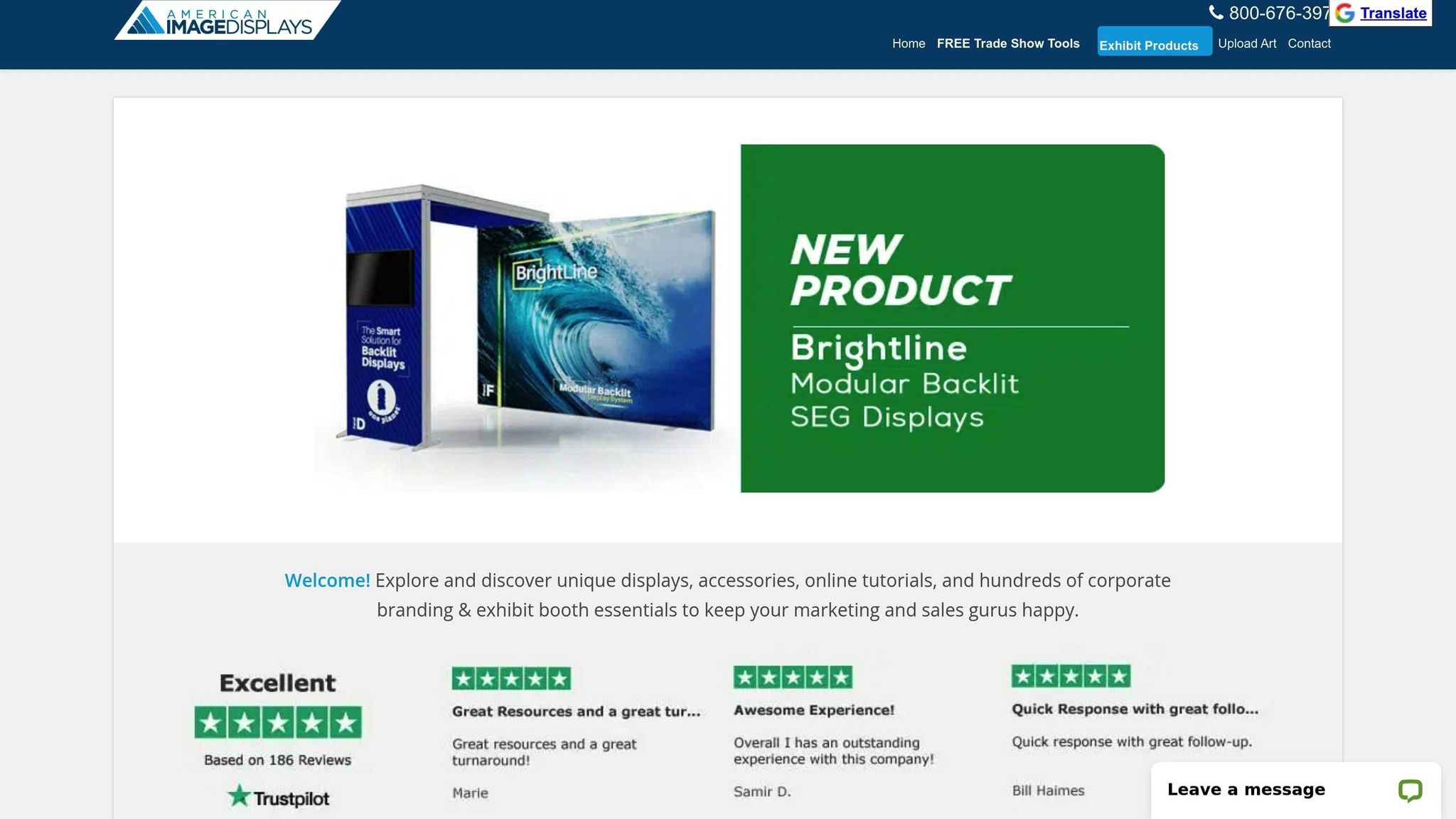
American Image Displays specializes in modular and tech-enabled booth designs, offering solutions that make gamification easier to implement and more effective. Their range of services is designed to align with your goals and budget, making it simple to create an engaging booth experience.
- Modular display systems: Their truss frame systems allow you to reconfigure your booth layout as needed, accommodating various game setups or adjusting based on what works best during the event.
- Digital display solutions: From spin-to-win games to advanced AR experiences, their digital media players and video walls integrate seamlessly with lead capture tools and social media platforms, ensuring your gamified elements support your overall marketing strategy.
- Custom graphics and branding: With free graphic design services, they help ensure that your gamified features align with your brand’s visual identity. This service minimizes the risk of design missteps and ensures a cohesive look.
- Charging stations and interactive kiosks: These additions not only keep visitors’ devices charged but also encourage app downloads and social sharing, extending engagement.
- Project management and logistics support: This team handles the setup, technical support, and coordination required for tech-heavy booths, making the process smoother – especially for companies new to gamification.
- Flexible pricing options: Whether you’re looking for a basic interactive setup under $5,000 or a fully gamified experience costing up to $125,000, they offer scalable solutions to match your needs and resources.
Measuring and Improving Gamification Results
Measuring Success and ROI
To assess whether gamification delivered the results you wanted, focus on three main areas: engagement, performance, and business impact. These metrics not only show if your strategy worked but also help explain why.
Engagement metrics provide instant feedback on how well your games grabbed attention. A great way to measure this is by comparing the number of participants in your games to the total number of booth visitors. Interactive booths have been shown to increase foot traffic and keep visitors around for longer – up to 40% more time, in fact. Tracking dwell time can give you a clear picture of how effectively your booth captivated attendees.
Performance indicators tell you which games resonated most with visitors. Look at completion rates to see which activities kept people engaged until the end, and which ones they abandoned. Social media activity, like hashtag usage, mentions, and contest entries, can also highlight your booth’s extended reach and popularity.
Business impact metrics tie your gamification efforts directly to revenue. For example, gamified lead capture methods can generate up to 50% more leads than traditional approaches. Calculate your cost per lead by dividing total expenses by the number of qualified leads. Then, track post-event conversions at 30, 60, and 90-day intervals to see how these leads contribute to your bottom line.
| Metric Category | Key Measurements | What It Tells You |
|---|---|---|
| Engagement | Participation rate, dwell time, repeat visits | How well games drew and kept attention |
| Performance | Completion rates, social shares, referrals | Which activities worked best |
| Business Impact | Lead conversion, cost per lead, revenue attribution | Financial return on gamification investment |
To calculate ROI, use this formula: (Total Gains – Total Cost) / Total Cost. For example, if you spent $15,000 on gamification and generated $75,000 in sales, your ROI would be 400%. Make sure to factor in both direct costs (like technology, prizes, and setup) and indirect expenses (such as staff time and design work). Use these insights to fine-tune your strategy for future events.
Improving Future Gamification Efforts
Post-event analysis is key to turning your data into actionable improvements for the next trade show. According to research, 63% of event marketers rely on attendee feedback to guide their adjustments.
Start by categorizing feedback into themes. Look for patterns in surveys, social media comments, and staff observations. For example, if multiple attendees mention that a game was too complicated, that’s a clear sign to simplify it next time.
Compare your booth’s performance across different events to identify trends. Did a trivia game perform better at niche industry events compared to general trade shows? Are certain age groups more drawn to physical games over digital ones? This kind of analysis helps you tailor gamification strategies to specific audiences and settings.
Before rolling out major changes, test new ideas through smaller pilot programs. For instance, if feedback suggests adding team-based challenges, try introducing one at a smaller regional event first. This lets you gather data and minimize risk before committing to a larger rollout.
Don’t just focus on what worked – document what didn’t. Understanding failed experiments can save you from repeating costly mistakes. Create a simple tracking system to log game types, audience reactions, technical issues, and staff feedback for each event.
When prioritizing changes, address recurring issues first. If technical problems frequently disrupt gameplay, investing in better equipment should take precedence over introducing new games. Fix the basics before expanding your gamification efforts.
Main Points Summary
Gamification can significantly elevate trade show engagement and deliver measurable business outcomes when done right. Research shows that 84% of marketers see a noticeable increase in attendee engagement when using game elements. The key is aligning games with your business goals, whether that’s generating leads, building brand awareness, or educating attendees about your products.
Selecting the right gamification approach depends on your audience, booth size, and budget. Digital games offer detailed tracking and social media integration, while physical games appeal to those who prefer hands-on experiences. Often, combining both creates the best results.
Integrating games into your booth design ensures they complement – not compete with – your core message. When games flow seamlessly with your booth’s layout and branding, visitors enjoy a cohesive experience that transitions naturally into meaningful business discussions.
By systematically measuring engagement, gathering feedback, and refining your approach, you can turn gamification into a repeatable strategy. Companies that follow this process see a 22% boost in brand loyalty.
American Image Displays offers a range of solutions to help you succeed with gamification. From modular displays designed for interactive elements to digital tools and project management services, they make it easier to execute gamified trade show strategies. Their free graphic design and logistics support simplify the process, even if you’re new to interactive marketing. With their help, you can create a booth that not only attracts attention but also delivers measurable results – all while staying within budget.
FAQs
What’s the best way to measure the success of gamification at trade shows?
To gauge how well gamification works at trade shows, start by defining specific goals that tie directly to your business objectives. These might include drawing more visitors to your booth, collecting quality leads, or increasing brand visibility. Keep an eye on key indicators like how many people participate in the game, the number of leads gathered, how engaged attendees are, and how many conversions result from the event.
Leverage tools to track real-time data during the trade show, allowing you to tweak your approach as needed. Once the event wraps up, calculate your return on investment (ROI) by comparing the gamification costs to the value of the outcomes you achieved. This method ensures you can measure results and make informed decisions for future events.
What are some affordable gamification ideas for smaller trade show booths?
For smaller trade show booths, you don’t need a massive budget to make a splash. Simple, interactive activities like trivia games, spin-the-wheel setups, or quick quizzes are easy to set up and grab attention right away. These fun, budget-friendly ideas can draw people in without breaking the bank.
Another smart option is hosting a virtual scavenger hunt or organizing lighthearted competitions with small prizes or giveaways. Not only do these activities keep visitors engaged, but they also help your booth stand out in their memory. With just a little creativity and a modest investment, you can create a buzz and attract more foot traffic to your booth.
How can I create gamification activities that appeal to different audience groups at trade shows?
To create gamification activities that truly connect with a variety of audience groups, start by digging into their demographics, preferences, and what motivates them. Think about factors like age, background, and hobbies to shape game elements like challenges, rewards, and themes. For instance, younger attendees might gravitate toward interactive digital games, while older participants could enjoy trivia or puzzles more.
Add visually striking and interactive features that match your audience’s tastes to make the experience more engaging. Customizing activities around their interests not only encourages participation but also leaves a lasting impression, making your booth stand out. When you focus on what excites your audience, you’re more likely to capture their attention and keep them involved.
